

 Achieve Academic Excellence with Expert Mathematics, Science, and English Academy Worldwide

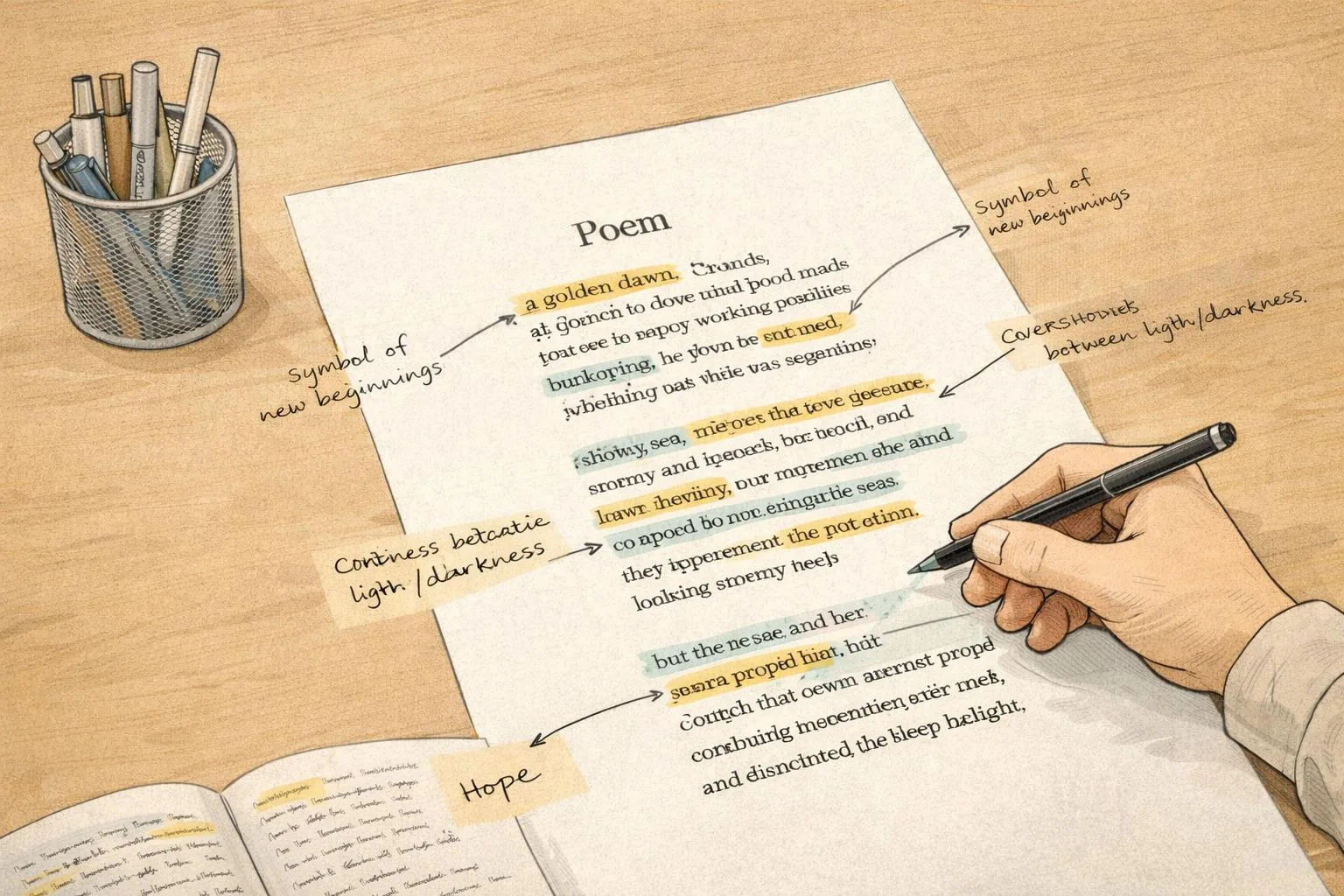
Unseen poetry is one of the most challenging aspects of A-Level English Literature because students are required to interpret and analyse a poem they have never studied before. Unlike familiar set texts, an unseen poem offers no opportunity to rely on memorised interpretations, previously prepared essays or classroom discussions. Instead, students must demonstrate their ability to understand the poem, identify literary techniques and explain how the poet creates meaning.
However, unseen poetry does not have to be intimidating. With a clear analytical approach, a strong understanding of poetic techniques and regular practice, students can develop the confidence to interpret unfamiliar poems and produce thoughtful, well-supported responses.
Whether you are preparing for an A-Level English Literature examination or improving your poetry analysis skills, this guide explains how to approach unseen poetry, explore language and structure, develop interpretations and write effective analytical responses.
In this guide, you will learn:
Unseen poetry analysis involves studying a poem that you have not previously encountered and explaining how the poet communicates ideas, emotions and experiences through language, structure and form.
Students are generally expected to demonstrate three important skills:
For example, a poem describing an empty house might initially appear to focus on a physical location. However, closer examination could reveal deeper themes of loneliness, memory, loss or the passage of time.
A successful analysis therefore goes beyond explaining what happens in a poem. It explores how the poet’s choices create meaning and why those choices are significant.
A structured reading process helps prevent students from rushing into analysis without fully understanding the poem.
Begin by reading the entire poem without stopping to analyse every individual word.
Your first objective is to understand its general subject, situation and emotional atmosphere.
Consider the following questions:
For example, a poem describing a childhood garden might initially seem nostalgic and comforting. However, later references to decay, silence or abandoned objects could introduce feelings of loss.
Avoid assuming that your first interpretation is necessarily the only correct one. Poetry frequently communicates several related ideas simultaneously.
After your initial reading, examine the poem more closely.
Underline or highlight words, expressions and patterns that appear particularly significant.
Look for:
For example, consider the phrase:
“The whispering leaves followed me home.”
The word “whispering” personifies the leaves, giving them a human quality. This could suggest that the natural environment feels alive, mysterious or connected to the speaker’s memories.
Do not annotate every word. Concentrate on features that contribute meaningfully to your interpretation.
Themes are the important ideas or experiences explored in a poem.
Common themes in unseen poetry include:
Ask yourself what the poet might be suggesting about the chosen subject.
For example, a poem about an ageing tree might explore more than nature. It could represent the passing of time, human mortality, resilience or the relationship between generations.
A strong interpretation connects specific details to the wider ideas developed throughout the poem.
The speaker is the voice through which the poem is communicated. The speaker should not automatically be assumed to be the poet.
Consider:
Understanding the speaker’s perspective can reveal why particular images and expressions have been chosen.
Identifying poetic techniques is only the beginning. The important skill is explaining how these techniques contribute to meaning.
Poets carefully select words to communicate ideas, establish atmosphere and influence readers.
Pay attention to:
Metaphor: A comparison that describes one thing as another.
Example: “The city was a sleeping giant.”
The metaphor presents the city as something powerful and potentially intimidating, suggesting its size, strength or hidden activity.
Simile: A comparison using words such as “like” or “as”.
Example: “Her memories scattered like autumn leaves.”
This simile suggests that memories are difficult to control and may be fading or disappearing.
Personification: Giving human qualities to non-human things.
Example: “The angry storm battered the windows.”
The adjective “angry” makes the storm appear aggressive, helping to establish a threatening atmosphere.
Symbolism: Using an object, image or action to represent a wider idea.
For example, a locked door might symbolise emotional isolation, restricted opportunities or an inaccessible past.
Sensory imagery: Language that appeals to sight, sound, touch, taste or smell.
Example: “The bitter wind cut across the empty field.”
The description creates a physical sensation while contributing to an atmosphere of discomfort and exposure.
When analysing imagery, always connect the technique to its possible significance within the poem.
The organisation of a poem can be just as important as its vocabulary.
Consider the following structural features:
Stanzas: Groups of lines that organise ideas and can signal changes in subject, perspective or emotion.
Enjambment: When a sentence or phrase continues beyond the end of a poetic line without a major punctuation break. It can create movement, uncertainty or continuity.
Caesura: A pause within a line, often created through punctuation. It can interrupt the rhythm and emphasise a particular thought or emotion.
Rhyme scheme: The pattern of rhyming words at the ends of lines. Regular rhyme can create a sense of order, while disrupted patterns may reflect uncertainty or tension.
Rhythm and metre: The patterns of stressed and unstressed syllables. Changes in rhythm can influence the pace and emotional character of a poem.
Repetition: The deliberate reuse of words, phrases or sounds to emphasise ideas and reinforce important themes.
For example, a poem that begins with regular, balanced stanzas but gradually develops shorter, fragmented lines might reflect a speaker experiencing emotional instability.
Always explain what a structural choice contributes to the poem rather than simply identifying it.
Sound is an important part of poetic expression. Poets use sound patterns to create atmosphere, establish rhythm and reinforce meaning.
Important techniques include:
Alliteration: Repetition of initial consonant sounds.
Example: “The silent sea swallowed the shore.”
The repeated ‘s’ sound creates a soft, flowing effect that may reinforce the quiet atmosphere.
Assonance: Repetition of similar vowel sounds.
Example: “The slow road home.”
The repeated long vowel sound contributes to the measured pace of the phrase.
Onomatopoeia: Words that imitate sounds.
Example: “The branches cracked beneath the weight.”
The word “cracked” helps the reader imagine the sharp sound of breaking branches.
Sibilance: Repetition of ‘s’ and ‘sh’ sounds.
This can create a whispering, hissing or flowing effect, depending on the context.
Do not assume that every sound device has the same effect in every poem. Explain how it works in the particular passage you are analysing.
Tone describes the speaker’s attitude towards the subject, while mood refers to the atmosphere or emotional impression created for the reader.
Common tones include:
A poem may begin with a hopeful tone and gradually become pessimistic as the speaker reflects on disappointment.
Look for changes in vocabulary, punctuation, imagery and sentence structure that signal a shift in attitude.
For instance, a speaker who initially describes a childhood home using warm, comforting imagery but later refers to silence and decay may be expressing a growing awareness of loss.
A good unseen poetry response does not simply identify techniques. It explains how the poet’s choices contribute to the poem’s overall meaning.
One useful approach is to move from observation to interpretation.
Consider the following example:
“The fading light slipped behind the hills.”
A basic observation would identify the image of fading light.
A stronger interpretation would explore how the fading light might suggest the end of a day, the passing of time or the loss of something valuable.
An even more developed response would consider how this image relates to other descriptions in the poem and whether it contributes to a wider theme of change or mortality.
Remember that literary interpretations should be supported by evidence. Avoid presenting an interesting idea as an established fact when the poem does not provide sufficient support.
Once you understand the poem, organise your observations into a clear and logical response.
Spend a few minutes identifying the poem’s main ideas and the most significant techniques.
A simple planning structure might look like this:
| Area | Questions to consider |
|---|---|
| Main idea | What is the poem communicating? |
| Language | Which words and images are significant? |
| Structure | How does the poem develop? |
| Tone | What emotions or attitudes are expressed? |
| Interpretation | What deeper ideas might the poet be exploring? |
Follow the examination instructions and the time allocated to your particular paper. Avoid spending too long planning at the expense of writing and checking your response.
Your introduction should establish your overall interpretation of the poem.
Briefly explain:
Avoid lengthy introductions that simply repeat the question.
Example:
The poem explores the relationship between memory and loss through the speaker’s reflections on a familiar place. By using nostalgic imagery, contrasting descriptions and a gradual shift in tone, the poet presents the difficulty of accepting change and the emotional significance of the past.
Each paragraph should explore a particular aspect of the poem.
A useful approach is:
This approach is sometimes called PEE or PEEL, although effective literary analysis should not become a rigid formula.
Example analytical paragraph:
The poet initially presents the natural environment as a source of comfort through the personification of the leaves as “whispering”. This description gives the surroundings a human quality, suggesting a close relationship between the speaker and the natural world. The gentle sound associated with “whispering” also contributes to the peaceful atmosphere. However, the image may suggest that the environment is connected to the speaker’s memories, making the landscape appear almost capable of communicating with them. In this way, the poet uses personification to establish an emotional connection between place and personal experience.
Notice how the paragraph moves beyond identifying personification to explaining its significance.
Your conclusion should bring together your main observations.
Consider:
Avoid introducing completely new techniques or repeating every point from the essay.
The best way to understand unseen poetry analysis is to see how the techniques work together in an actual example.
Consider this original practice poem.
The garden sleeps beneath the rain,
Its broken gate remembers pain.
Where roses once embraced the sun,
The weeds now grow where children run.
An empty swing moves in the breeze,
Its whispered songs among the trees.
And though the years have left their mark,
The roots still hold beneath the dark.
The poem explores several connected ideas:
The garden appears to represent a place associated with childhood memories. Its present condition contrasts with its happier past.
The opening line, “The garden sleeps beneath the rain”, uses personification to present the garden as a living thing.
The word “sleeps” suggests stillness, inactivity and perhaps abandonment. It establishes a quiet atmosphere while encouraging the reader to view the garden as something that once possessed greater vitality.
Similarly, the phrase “broken gate remembers pain” gives the gate a human ability to remember. This personification connects the physical deterioration of the garden with emotional experiences of loss.
The contrast between “roses” and “weeds” also contributes to the poem’s meaning. Roses traditionally suggest beauty and affection, whereas weeds can represent neglect or uncontrolled growth.
Together, these images suggest that the garden has undergone significant change.
The poem contains two four-line stanzas.
The first stanza introduces the abandoned garden and establishes a contrast between its past and present condition.
The second stanza develops the theme of memory through the image of the empty swing. This object suggests that children once played in the garden, although their absence is now noticeable.
The final couplet introduces a more reflective perspective. Although the years have changed the garden, the roots remain beneath the darkness.
This ending introduces the possibility of endurance and renewal, preventing the poem from becoming entirely pessimistic.
The poem initially creates a melancholic and nostalgic mood through references to rain, broken objects and abandoned spaces.
However, the final two lines suggest a quieter sense of hope.
The roots symbolise something that survives beneath the visible signs of decay. This could suggest that memories, relationships or personal experiences continue to influence people even after circumstances change.
The poet presents the garden as a symbol of childhood memories and the passage of time. The personification in “The garden sleeps beneath the rain” suggests that the garden has become inactive and forgotten, contrasting with the lively environment implied by the later reference to children. Furthermore, the description of the “broken gate” suggests physical deterioration while the unusual suggestion that it “remembers pain” connects the setting with emotional loss. This creates the impression that the garden is more than an abandoned physical space; it represents a past that continues to influence the speaker. However, the final reference to roots that “still hold beneath the dark” introduces a suggestion of endurance, implying that meaningful experiences can survive despite the passage of time.
This paragraph demonstrates how to combine quotation, language analysis, interpretation and wider thematic understanding.
Even students who understand poetic terminology can lose the quality of their analysis by making avoidable mistakes.
Writing that a poet uses metaphors, similes and personification is not enough.
Explain why a particular technique matters and how it contributes to the poem’s meaning.
Retelling what happens in each stanza does not demonstrate detailed literary analysis.
Use brief references to the poem and explore the significance of particular words, images and structural choices.
Some students concentrate entirely on language and imagery.
Remember that stanza organisation, line breaks, rhythm, rhyme and punctuation can all contribute to meaning.
Not every poem is about love, death or childhood, and not every image has a hidden symbolic meaning.
Develop interpretations that are supported by the actual language and structure of the poem.
Literary terminology should improve the precision of your analysis, not make your writing unnecessarily complicated.
Use technical vocabulary accurately and prioritise clear explanations.
A poem may develop from happiness to sadness, confidence to uncertainty or anger to acceptance.
Look at how the poem begins, develops and concludes rather than analysing each feature in isolation.
Regular practice is one of the most effective ways to become confident in unseen poetry analysis.
Try the following exercises.
Read these lines:
“The restless wind rattled the door,
While shadows crept across the floor.”
Identify:
Suggested answers:
Consider the following line:
“My childhood vanished with the falling leaves.”
Think about:
There is no single compulsory interpretation. Your response should explain how the imagery supports your reading.
Analyse the following lines:
“The shadows danced upon the wall,
A fleeting sign of life’s own call.”
Consider the imagery, personification, tone and possible symbolic meaning.
Try writing one developed paragraph using a relevant quotation from each line.
Choose an unfamiliar poem from a suitable A-Level English Literature resource or examination paper.
Practise the following process:
Use the timing and assessment requirements of your particular examination board rather than assuming that every A-Level paper follows the same format.
To improve the quality of your examination responses, develop the following habits.
Read actively: Pay attention to the poem’s language, structure and progression rather than reading passively.
Support your interpretations: Use short, relevant quotations to demonstrate how the poem communicates meaning.
Analyse individual words: Explore the connotations of significant vocabulary and explain why the poet might have selected particular expressions.
Consider alternative interpretations: Where appropriate, acknowledge that an image or phrase could suggest more than one idea.
Explore the whole poem: Connect individual techniques to the wider development of themes and emotions.
Manage your time: Allocate sufficient time for reading, planning, writing and checking your work.
Practise regularly: Work with unfamiliar poems from different periods, styles and literary traditions.
Most importantly, remember that strong unseen poetry analysis is based on thoughtful interpretation rather than memorising a fixed list of poetic devices.
Begin by reading the entire poem to understand its subject, speaker and general tone. Then annotate significant language, identify themes and examine structural features. Develop an overall interpretation before beginning your written response.
Look for metaphors, similes, personification, symbolism, imagery, alliteration, assonance, enjambment, caesura, repetition, rhyme and changes in rhythm. Focus on the techniques that contribute meaningfully to the poem rather than trying to identify every possible device.
Start with a focused introduction explaining your interpretation. Develop analytical paragraphs using relevant quotations and detailed explanations of language, structure and form. Finish with a conclusion that brings together your main ideas.
Look for repeated ideas, significant images, the speaker’s experiences and the way the poem develops. Consider what the poet might be communicating about broader human experiences such as love, identity, memory, loss or change.
Practise analysing unfamiliar poems regularly. Develop your understanding of poetic techniques, improve your use of textual evidence and learn to explain how language and structure contribute to meaning. Reviewing feedback on your written responses can also help you identify areas for improvement.
Unseen poetry can be challenging because students must interpret unfamiliar material independently. However, developing a systematic approach to reading, annotation and analysis makes the task more manageable. Regular practice helps students become more confident and precise in their interpretations.
No. It is more important to understand the techniques you use and explain their significance accurately. A focused discussion of a few important features is generally more valuable than listing numerous techniques without meaningful analysis.
Developing strong unseen poetry analysis skills takes practice, critical thinking and a clear understanding of how writers communicate meaning.
At ON22 Academy, students can explore online A-Level English tuition designed to support their understanding of literary texts, analytical writing and examination preparation.
Whether you need help interpreting poetry, exploring literary techniques or developing more confident essay-writing skills, structured learning and individual guidance can help you make progress.
Explore our A-Level English tuition to learn more about our online learning opportunities.
Build your confidence in English Literature and develop the skills to approach unfamiliar poems with greater independence.
Providing global expert guidance and support to help students thrive academically.
Never miss a thing! Catch up on updates, events, discounts and more.
Achieve Academic Excellence with Expert Mathematics, Science, and English Academy Worldwide