


Lower Secondary Mathematics
Online Classes
Structured online Maths for ages 11–14 — building number fluency, algebraic thinking, reasoning confidence and GCSE readiness before exam pressure begins.
About ON22 Academy Lower Secondary Mathematics
ON22 Academy is a virtual academy and online education provider offering Lower Secondary Mathematics online classes for students aged 11–14. Our support helps students strengthen number fluency, algebraic thinking, ratio, proportion, geometry, statistics, probability and mathematical reasoning before GCSE or IGCSE preparation begins. Lessons follow British Curriculum expectations where suitable and are delivered through structured online teaching, guided practice and parent feedback.
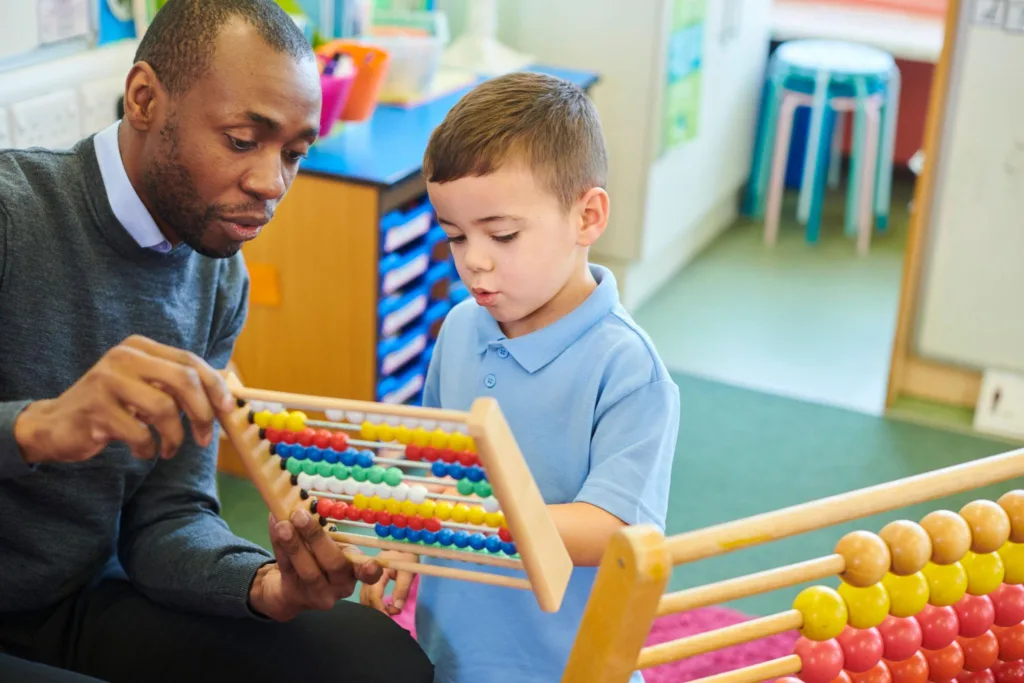
Building the Bridge Between Primary Maths and GCSE
Lower Secondary Mathematics is the bridge between Primary foundations and GCSE or IGCSE examination preparation. At ages 11–14, students begin to meet more abstract mathematical ideas. Maths becomes less about completing simple calculations and more about understanding relationships, using symbols, solving multi-step problems and explaining reasoning. This is also the stage where earlier gaps often become more visible. A student who managed Primary Maths may begin to struggle when fractions connect to percentages, when arithmetic connects to algebra, or when a word problem requires several steps. ON22 Academy’s Lower Secondary Mathematics online classes help students build confidence, accuracy and deeper understanding before formal GCSE or IGCSE pressure begins.
The aim is not to rush students into exam papers too early. The aim is to make sure they are mathematically ready for the next stage.
Who Lower Secondary Maths Support Is For
Lower Secondary Mathematics support may be suitable for students who:
Ages 11–14
Support tailored to the student's current level, confidence and pathway.
British Curriculum Mathematics
Lessons aligned to British Curriculum expectations where suitable.
Fractions, Decimals & Percentages
Students who struggle when connecting these closely related topics.
Home Educators
Structured Maths teaching for families who home educate.
International Students
UK-style Mathematics progression for families learning abroad.
Algebra Confidence
Students who find algebraic notation and equation solving difficult.
GCSE Preparation
Preparing for the transition into GCSE or IGCSE Mathematics.
Problem Solving
Students who can follow examples but struggle with unfamiliar questions.
Confidence Building
Students who have lost confidence and need calm, regular support.
Some students need help with one topic. Others need a wider Lower Secondary Maths pathway because several gaps have built up over time. A consultation helps identify the right approach.
Why Lower Secondary Maths Matters
Lower Secondary Maths is sometimes underestimated because students are not yet sitting final GCSE examinations. This stage is where students develop the habits and understanding that future exam success depends on. A student who reaches GCSE without these habits may find exam preparation much harder than it needs to be.
Reading questions carefully
Understanding exactly what is being asked before attempting a solution.
Showing working clearly
Organising steps so methods are visible, even if the answer is wrong.
Using mathematical vocabulary
Describing ideas precisely using the right terms and notation.
Checking whether answers make sense
Pausing to estimate, verify and catch errors before moving on.
Understanding algebraic notation
Seeing letters and symbols as tools for expressing patterns and relationships.
Applying knowledge to new situations
Transferring methods and ideas across topics and unfamiliar questions.
Explaining reasoning
Articulating why a method works, not just what the answer is.
Moving between written and mental methods
Choosing the most efficient approach based on the problem at hand.
Building independence
Becoming less reliant on step-by-step prompting over time.
What Students May Learn
Topics covered depend on the student’s age, level and future Maths pathway.
🔢 Number & Numerical Fluency
Place value, negative numbers, factors, multiples, prime numbers, powers and roots, rounding, estimation, order of operations, mental arithmetic, written calculation methods and checking answers. Strong number confidence supports algebra, ratio and GCSE problem solving.
½ Fractions, Decimals & Percentages
Equivalent fractions, simplifying, adding, subtracting, multiplying and dividing fractions, converting between forms, percentages of amounts, percentage increase and decrease, and applying these ideas in word problems and real-world contexts.
⚖️ Ratio & Proportion
Simplifying ratios, sharing in a ratio, direct proportion, scale drawings, recipes and mixtures, maps, unitary method and proportion problems in context. Topics that reveal whether a student can reason mathematically.
🔣 Algebra
Algebraic notation, expressions, simplifying, substitution, expanding brackets, factorising, solving equations, forming equations, sequences, formulae, coordinates and graphs. One of the biggest shifts from Primary to Lower Secondary Mathematics.
📐 Geometry & Measures
Angles, lines, triangles, quadrilaterals, polygons, symmetry, transformations, coordinates, perimeter, area, volume, surface area, circles, units and conversions, bearings and constructions where appropriate. Combining visual understanding with accurate calculation.
📊 Statistics & Probability
Collecting data, frequency tables, bar charts, line graphs, pie charts, scatter graphs, averages, range, interpreting data, probability scales and simple probability calculations. Skills that also support Science, Geography and Business studies.
🧩 Mathematical Reasoning & Problem Solving
Multi-step problems, worded questions, real-world contexts, choosing correct methods, explaining reasoning, checking answers, spotting errors, working backwards, finding patterns and presenting solutions clearly. Where students show true understanding.
🎯 Topics Adapted to Each Student
The exact topics covered depend on the student’s age, confidence, gaps and future pathway. Some students need consolidation of earlier work. Others need extension and deeper reasoning. A consultation helps identify the right starting point.
How Lower Secondary Maths Lessons Work Online
Lower Secondary students need lessons that are structured, interactive and clear. ON22 Academy’s online classes are built around a consistent structure that develops both understanding and independence:
- Teacher-led explanation — Concepts explained step by step with worked examples and clear modelling.
- Guided practice — Students practise methods with support before moving towards independence.
- Questioning and checking understanding — Teachers use questions to identify whether students understand the method or are simply copying.
- Problem-solving tasks — Students apply knowledge to unfamiliar or multi-step questions.
- Feedback and correction — Mistakes are reviewed so students understand what went wrong and how to improve.
- Parent communication — Feedback on progress, effort and areas needing more practice at home.
- GCSE / IGCSE readiness — Fluency, reasoning and confidence built steadily for Upper Secondary Mathematics.
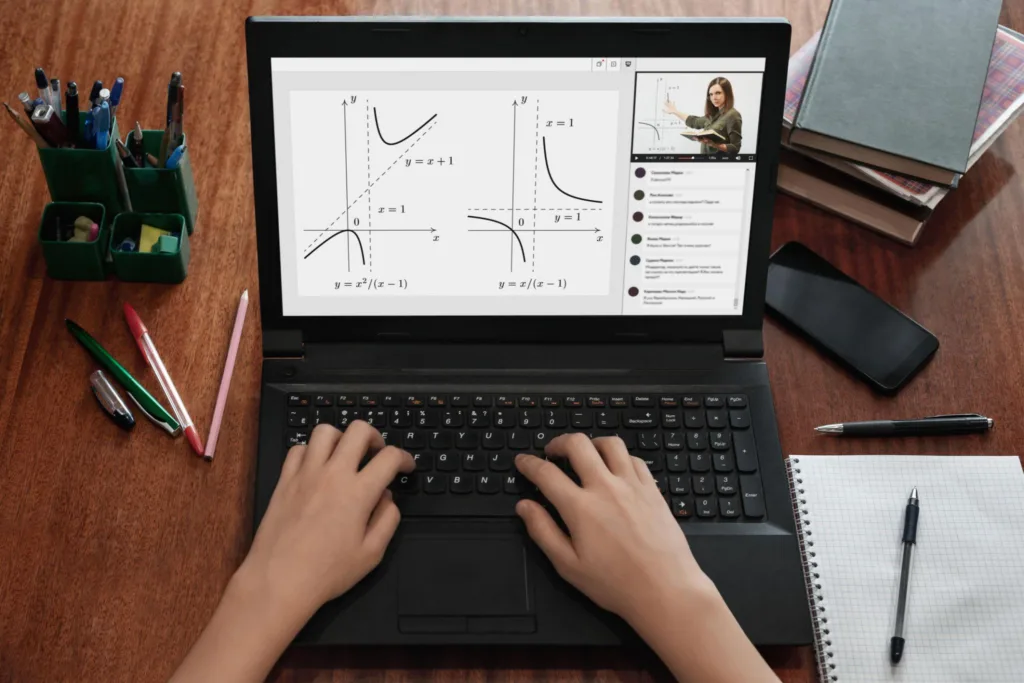
Online Maths works best when students are active in the lesson — showing working, answering questions, attempting problems and completing follow-up practice, not simply watching.
The Real Challenge at Ages 11–14
Students aged 11–14 are often old enough to appear independent, but not always organised enough to manage learning alone. This is why Lower Secondary Maths support should not only teach topics — it should also teach habits.
Not showing working
Students skip steps, making it impossible to identify where errors occur.
Guessing instead of reasoning
Choosing operations without understanding why the method applies.
Avoiding difficult topics
Skipping fractions, algebra or word problems rather than confronting them.
Over-relying on calculators
Losing number confidence and struggling with non-calculator sections.
Rushing through homework
Completing tasks quickly without checking or correcting mistakes.
Believing Maths ability is fixed
Saying "I'm just not a Maths person" as a reason to stop trying.
Students need to learn how to slow down, organise working, check answers and keep practising when a topic feels difficult.
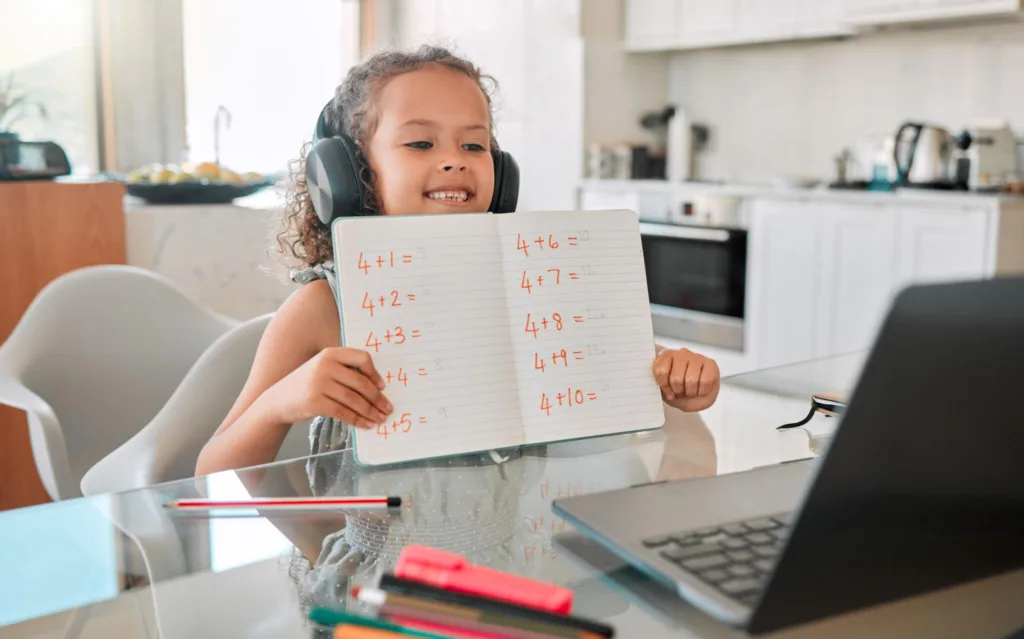
Our Experience Supporting Lower Secondary Maths Families
In our experience, many Lower Secondary students do not dislike Maths itself. They dislike feeling lost.
A student may sit quietly in lessons, copy examples and appear to understand. The problem becomes visible when they are asked to solve a question independently. That is often when parents hear, “I just don’t get Maths.”
We have seen that students can recover confidence when gaps are dealt with calmly. A child who struggles with algebra may really need stronger number fluency. A student who panics with percentages may need fractions explained again.
The strongest progress usually happens when students attend regularly, practise between lessons and receive feedback that explains the mistake rather than simply marking it wrong. Lower Secondary is a good stage to act because there is still time before GCSE pressure becomes urgent.
Confidence and Accuracy Need to Grow Together
Some students gain confidence quickly but still make repeated careless errors. Others are accurate with familiar methods but lose confidence when questions change. Lower Secondary Mathematics should help both confidence and accuracy grow together. A student who becomes calm, careful and willing to try is often in a much stronger position for GCSE or IGCSE later.
Understand the method
Practise enough for fluency
Show working clearly
Recognise common mistakes
Explain reasoning
Apply in new contexts
Learn from feedback
Build resilience
Preparing for GCSE and IGCSE Mathematics
Lower Secondary Mathematics should prepare students for Upper Secondary study without turning every lesson into exam training. Before moving into GCSE or IGCSE, students should be developing confidence in:
Number operations
Fractions, decimals & percentages
Ratio & proportion
Algebraic notation
Solving equations
Graphs & coordinates
Geometry & measures
Statistics & probability
Mathematical reasoning
Multi-step problem solving
Showing working clearly
Learning from mistakes
Students who enter GCSE with weak foundations often spend Year 10 and Year 11 trying to repair gaps while also learning new content. It is better to strengthen the foundations earlier.
Foundation or Higher Later?
At Lower Secondary level, students do not usually need to decide their final GCSE tier immediately, but their progress will affect future options. For GCSE Mathematics, some students later prepare for Foundation tier and others for Higher tier, depending on their ability, confidence, target grades and exam board route. Lower Secondary Maths helps by building the skills both routes depend on:
- Number fluency
- Algebra confidence
- Ratio and percentage understanding
- Geometry skills
- Problem-solving habits
- Accuracy under pressure

Parents should avoid assuming too early that a child is “not a Higher student” or “definitely a top-grade student.” The better approach is to build understanding carefully and review progress over time.

Parents and guardians remain responsible for checking official home education, local authority, safeguarding, legal and examination requirements that apply to their child.
Supporting Home-Educated Students
Lower Secondary Mathematics is especially important for home-educated students because it prepares the ground for future GCSE or IGCSE decisions. ON22 Academy can support home-educating families by providing structured Maths teaching, guided practice and parent communication. Home-educating parents may need to think about:
- Whether Maths is being studied consistently
- Whether topics are being covered in a sensible sequence
- Whether earlier gaps are being revisited
- Whether the student can work independently
- Whether problem solving is included
- Whether the student is preparing for GCSE or IGCSE later
- Whether a private candidate exam route may eventually be needed

International students may have covered similar topics in a different order or with different methods. This can create hidden gaps, especially in algebra, ratio, geometry or mathematical vocabulary.
Supporting International Students
International families may choose Lower Secondary Mathematics online classes because they want their child to follow British Curriculum expectations while living outside the UK.
- Moving between countries
- May enter UK education later
- Need English-medium Mathematics support
- Studying in another curriculum but need British Curriculum alignment
- Preparing for future GCSE or IGCSE Mathematics
- Need flexible online learning across time zones
This Support May Suit Your Child If…
- Is aged 11–14
- Needs stronger Maths confidence
- Struggles with fractions, decimals, percentages or ratio
- Finds algebra difficult
- Can follow examples but struggles independently
- Avoids word problems or multi-step questions
- Needs British Curriculum Mathematics support
- Is home educated and needs structured Maths teaching
- Is learning internationally and needs UK-style progression
- Needs preparation before GCSE or IGCSE Mathematics
- Can attend online lessons consistently
This Support May Not Be Right If…
- The student is already preparing for final GCSE or IGCSE exams and needs Upper Secondary support
- The student cannot focus online even with support
- Attendance is likely to be irregular
- Follow-up practice will not be completed
- There is no suitable study space
- Parents expect online lessons alone to replace independent practice
- The student needs full-time in-person supervision
- The family wants only occasional homework answers rather than structured learning
This does not mean the student cannot improve — it means the pathway may need to be adjusted or the home routine strengthened first.
What Parents Can Do at Home
Parents do not need to be Maths specialists, but they can help create the conditions for progress. Small, regular practice usually works better than occasional panic before a test.
- Keep lesson times consistent
- Check that follow-up work is completed
- Encourage the student to show working
- Review teacher feedback together
- Practise times tables and number fluency if needed
- Ask the student to explain their method
- Avoid negative labels such as “not a Maths person”
- Encourage calm correction of mistakes
- Ensure there is a quiet workspace
- Do not wait until Year 10 to address gaps
Start with a Lower Secondary Mathematics Consultation
A consultation helps us understand your child’s current Maths level before recommending support. We will discuss age, school situation, number fluency, fractions, algebra confidence, ratio, geometry, problem solving and whether online learning is suitable.
Topics we usually cover: age & situation · number fluency · fractions, decimals & percentages · algebra · ratio & geometry · problem solving · GCSE plans · home support available · consolidation, confidence or challenge needed
 Achieve Academic Excellence with Expert Mathematics, Science, and English Academy Worldwide