


Lower Secondary
Online Learning
Structured British Curriculum online learning for students aged 11–14 — building the subject knowledge, confidence and academic habits they need before GCSE and IGCSE preparation begins.
About ON22 Academy Lower Secondary Online Learning
ON22 Academy is a virtual academy and online education provider offering structured British Curriculum online learning for Lower Secondary students aged 11–14. This pathway helps students strengthen subject knowledge, confidence, study habits and academic independence before GCSE or IGCSE preparation begins. Students may study Mathematics, English, Science, French and Spanish through live online lessons and guided support.

Not to rush students into exam technique too early — but to prepare them properly. The habits formed at ages 11–14 will directly affect how manageable GCSE and IGCSE study feels later.
The Bridge Between Primary and GCSE Study
Lower Secondary is one of the most important stages in a child’s education because it sits between foundation learning and formal examination preparation.
Students aged 11–14 are no longer simply practising basic skills. They are expected to read more independently, write in more detail, solve multi-step problems, use subject vocabulary correctly and begin managing a heavier academic workload.
This is also the stage where earlier gaps often become more obvious. A student may have coped in Primary Years but struggle when Mathematics becomes more abstract, Science more technical or English requires deeper analysis.
Who the Lower Secondary Pathway Is For
Designed for students aged 11–14 who need structured British Curriculum online learning across core and selected subjects.
GCSE & IGCSE Preparation
Students who need to build solid subject foundations before formal examination preparation begins.
Home-Educated Learners
Students who need a clearer academic structure and regular subject teaching outside a traditional school.
International Students
Students following or moving towards the British Curriculum while studying abroad.
Students Between Schools
Learners who have moved between schools, countries or curriculum systems and need to realign.
Confidence & Gap Closure
Students who need stronger confidence in Mathematics, English or Science before gaps widen further.
Independent Study Habits
Students who need help developing the routines and organisation they will need at GCSE level.
The right choice depends on the student’s current level, confidence and future plans. A consultation helps identify the correct route.
Why Lower Secondary Matters
Lower Secondary is sometimes underestimated because there are no GCSE examinations at this stage. That can be a mistake — this is when the habits that shape future performance are built.
Academic Habits
Reading instructions carefully · explaining answers properly · showing working in Maths · using evidence in English · learning scientific vocabulary · completing homework without constant prompting.
Study Organisation
Revising small amounts regularly · asking for help before a gap becomes serious · managing more than one subject at a time · reviewing feedback · planning the week independently.
Confidence & Independence
Moving from simple answers to explained answers · building confidence in difficult subjects · tolerating challenge without avoiding it · developing the independence needed for GCSE study.
A student who reaches Year 10 without these habits may find GCSE or IGCSE preparation much harder. Lower Secondary is the time to build them while there is still room to adjust.
Lower Secondary Mathematics
Mathematics at this stage begins to move beyond arithmetic into more abstract thinking. Students need to strengthen fluency while also learning how to reason, solve problems and explain their methods.
Students may work on:
- Number and calculation
- Fractions, decimals and percentages
- Ratio and proportion
- Algebraic thinking
- Expressions and equations
- Sequences and graphs
- Geometry and measures
- Area, perimeter and volume
- Statistics and probability
- Multi-step problem solving
Many students lose confidence in Mathematics because they can follow a method in class but cannot apply it independently later. Lower Secondary Maths should help students understand why methods work, not simply memorise steps.
Lower Secondary English
English at Lower Secondary level becomes more demanding because students need to read more carefully and write with greater control.
Students may work on:
- Reading comprehension
- Inference and deduction
- Vocabulary development
- Grammar and sentence control
- Creative writing
- Non-fiction writing
- Poetry, prose and drama
- Basic literary analysis
- Paragraph structure
- Using evidence in written responses
GCSE English Language and English Literature both require students to explain ideas clearly, support points with evidence and write under time pressure. Those habits begin earlier than many parents realise.
Lower Secondary Science
Lower Secondary Science introduces students to more structured scientific thinking across Biology, Chemistry and Physics.
- Cells and living organisms
- Human body systems
- Ecosystems and environment
- Particles and materials
- Atoms, elements and compounds
- Forces and motion
- Energy and electricity
- Light and sound
- Scientific investigation
- Data handling and conclusions
Online Science can support knowledge, reasoning and discussion effectively. Where practical work is involved, parents may need to support safe home-based activities or check requirements with relevant exam routes when the student moves towards GCSE or IGCSE.
French & Spanish
Lower Secondary languages help students develop confidence before examination pressure begins — in speaking, listening, reading and writing.
🇫🇷 French
- Vocabulary & pronunciation
- Listening comprehension
- Speaking practice
- Reading short texts
- Grammar & verb patterns
- Opinions and cultural understanding
🇪🇸 Spanish
- Core vocabulary & pronunciation
- Listening & speaking
- Reading comprehension
- Sentence building
- Grammar patterns
- Cultural awareness
Students cannot usually build confidence through occasional revision alone. Short, consistent work with vocabulary, speaking and listening makes a significant difference over time.
How Lower Secondary Online Learning Works
Lower Secondary students need more independence than Primary students, but they still need structure. ON22 Academy’s Lower Secondary pathway may include:
- Live online lessons — teacher-led sessions with explanation, questioning and guided practice
- Structured subject resources — activities, reading, practice tasks and revision materials
- Regular feedback — on understanding, effort and areas for improvement
- Parent communication — so parents can support routine and follow-up work at home
- Preparation for future study — gradually building skills needed for GCSE, IGCSE and Upper Secondary pathways

The best online lessons are not passive. Students should be expected to think, respond, ask questions and complete work between sessions. Independent practice between lessons is what closes gaps.
The Real Challenges at Ages 11–14
Lower Secondary students are often old enough to appear independent, but not always mature enough to manage learning without support.
Avoidance & Gaps
Avoiding difficult subjects · rushing written work · not reviewing teacher feedback · gaps hidden by surface confidence · difficulty moving from simple answers to explained answers.
Organisation & Habits
Weak organisation · lack of regular reading · poor revision habits · not completing follow-up work · treating every subject as equally urgent or equally unimportant.
Distraction & Environment
Too much screen distraction at home · no protected lesson time · chaotic study spaces · inconsistent attendance · parents assuming the student can manage everything alone.
This does not mean online learning cannot work. It means the structure around the student matters. Parents should not assume that an 11–14-year-old will automatically manage everything alone.
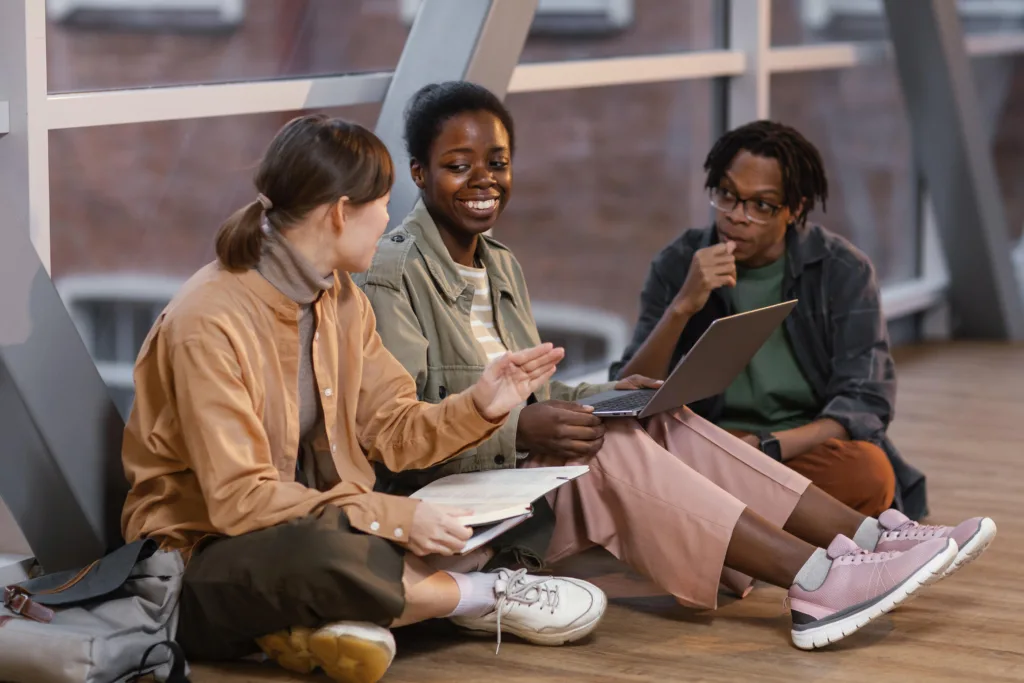
What students respond to
Students at this age respond well to calm honesty. They do not need to be frightened about GCSEs, but they do need to understand that their habits now will affect their options later.
Our Experience Supporting Families
In our experience, Lower Secondary families often contact ON22 when something has started to slip, but before the situation feels urgent.
A parent may notice that their child avoids Maths, writes very little in English, or says Science is “fine” while test results suggest otherwise. International families may find that their child’s previous curriculum does not match British Curriculum expectations exactly. Home-educating families may have covered topics, but not always in a sequence that prepares the student for GCSE or IGCSE later.
What we have learned
The strongest progress usually happens when families act before Year 10. Lower Secondary gives students time to rebuild confidence, close gaps and develop better habits without the immediate pressure of final examinations.
Lower Secondary for Home-Educating Families
Home education during ages 11–14 needs careful planning because GCSE and IGCSE choices are not far away.
Home-educating families may need to think about:
- Which subjects should be studied regularly
- Whether the student is keeping pace with age-stage expectations
- How English, Mathematics and Science are being covered
- Whether Modern Foreign Languages should be introduced or continued
- How learning is being recorded
- When to begin thinking about GCSE or IGCSE options
- Whether private candidate exam routes may be needed later
Lower Secondary for International Families
International families often need Lower Secondary support when a child is moving towards the British Curriculum or may later enter GCSE or IGCSE study.
The challenge is often alignment. A student may have studied similar topics in another curriculum but not in the same order, depth or language style.
Families should consider:
- Time zone suitability
- English language confidence
- Current curriculum background
- Future GCSE or IGCSE plans
- Whether exam centre options may be needed later
- How online study fits around local schooling or home education
Preparing for Upper Secondary
The Lower Secondary pathway should prepare students for the next stage: GCSE or IGCSE study. By the time students move into Upper Secondary, they should be developing:
- Stronger reading stamina
- Clear written explanations
- Secure number and algebra foundations
- Scientific vocabulary and reasoning
- More independent study habits
- Confidence asking questions
- Better organisation
- Early revision routines
- Awareness of subject strengths
- Realistic academic self-knowledge
The important point
The transition into Upper Secondary should be made deliberately, not left until exam preparation has already begun. Some students may need consolidation; others may be ready for additional challenge.


At Lower Secondary level, students need to feel that adults are still paying attention. Independence grows gradually — it is not automatic.
What Parents Can Do at Home
Parents do not need to teach every subject, but they do need to support the structure around learning.
Helpful routines include:
- Keeping lesson times consistent
- Checking that follow-up work is completed
- Encouraging regular reading
- Asking students to explain what they have learned
- Reviewing teacher feedback
- Helping students plan the week
- Reducing distractions during lessons
- Not waiting until Year 10 to address gaps
- Encouraging effort even when confidence is low
Start with a Lower Secondary Consultation
A consultation helps us understand your child’s current level, confidence and learning situation before recommending a pathway. We will usually discuss age and current education, current strengths and gaps, English, Mathematics and Science confidence, whether French or Spanish support is needed, whether your child is in school, home educated or learning internationally, and whether online learning is likely to suit the student.
Topics we usually cover: age & current education · subject strengths & gaps · English, Maths & Science confidence · French & Spanish needs · school, home education or international situation · future GCSE or IGCSE plans · study structure at home · online learning suitability
 Achieve Academic Excellence with Expert Mathematics, Science, and English Academy Worldwide