


Primary Science
Online Classes
Structured online Science for ages 5–11 — building curiosity, scientific enquiry skills and strong British Curriculum foundations for later Biology, Chemistry and Physics.
About ON22 Academy Primary Science
ON22 Academy is a virtual academy and online education provider offering Primary Science online classes for students aged 5–11. Our support helps children develop curiosity, scientific vocabulary, observation skills, simple investigation techniques and confidence understanding the world around them. Lessons follow British Curriculum expectations where suitable and may include Biology, Chemistry, Physics, Earth and Space, materials, forces, light, sound and living things.
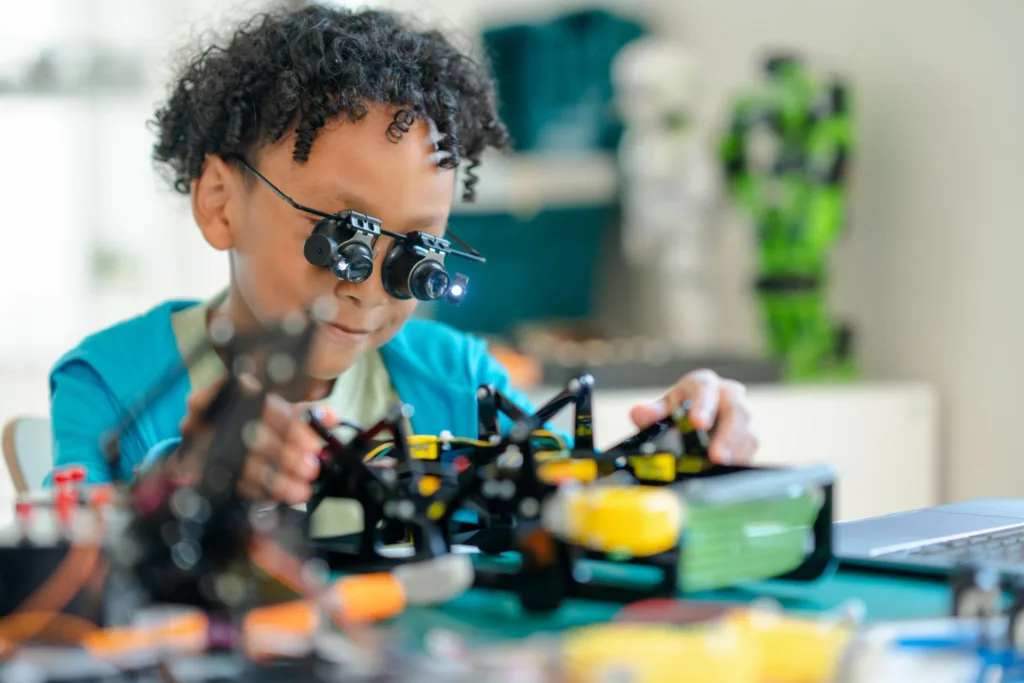
Helping Children Think Like Young Scientists
Primary Science should help children ask questions, notice patterns and understand the world around them.
At ages 5–11, Science is not about memorising long lists of facts. It is about learning how to observe carefully, describe what is happening, use the right vocabulary and begin explaining simple ideas.
Children are naturally curious. They ask why the sky changes colour, why plants grow towards light, why ice melts, why magnets attract, why shadows move and why some materials float while others sink. Good Primary Science teaching uses that curiosity and turns it into structured learning.
ON22 Academy’s Primary Science online classes help students build scientific understanding through clear explanation, guided discussion, visual learning and age-appropriate enquiry.
The aim is not to rush children into GCSE Science. The aim is to help them build the foundations that make later Biology, Chemistry and Physics easier to understand.
Who Primary Science Support Is For
Primary Science support may be suitable for children who:
Ages 5–11
Support tailored to the child's age, confidence and current Science level.
British Curriculum Science
Lessons aligned to British Curriculum Science expectations where suitable.
Curious But Needs Structure
Children who enjoy Science but need more organised scientific understanding.
Home Educators
Structured Science teaching for families who home educate.
International Students
UK-style Science support for families learning abroad.
Scientific Vocabulary
Children who struggle with scientific words and explaining observations.
Lower Secondary Prep
Building confidence before Lower Secondary Science becomes more technical.
Visual & Enquiry Learners
Children who enjoy practical ideas, discussion and visual learning.
Patient Guided Teaching
Students who benefit from clear explanation and guided questioning.
Why Primary Science Matters
Primary Science matters because it teaches children more than facts. These skills support later learning in Science, Mathematics, Geography, Design Technology and many other subjects.
Curiosity
Observation
Questioning
Reasoning
Vocabulary
Explanation
Evidence-Based Thinking
Investigation Skills
A child who learns to ask “What do I notice?” and “How do I know?” is beginning to think scientifically.
What Students May Learn
Topics covered depend on the child’s age, confidence and current Science level.
🌿 Living Things & Habitats
Plants, animals, habitats, food chains, life cycles, classification, adaptation, ecosystems and human impact on the environment. Children begin to understand how living things depend on each other and their surroundings.
🧬 The Human Body
The skeleton, muscles, teeth, digestion, senses, healthy living, exercise, nutrition and growth. One of the most engaging areas of Primary Science because children can connect it directly to themselves.
🧪 Materials & Their Properties
Everyday materials, solids, liquids and gases, melting and freezing, heating and cooling, waterproof, magnetic and transparent materials, and reversible and irreversible changes where appropriate.
⚡ Forces & Motion
Pushes and pulls, gravity, friction, magnets, floating and sinking, simple machines, movement and speed, cause and effect. Children begin to understand that movement has causes and patterns.
💡 Light & Sound
Light sources, shadows, reflection, how we see, sound sources, vibrations, volume and pitch, how sound travels. These topics connect everyday experiences to scientific explanation and build vocabulary for later Physics.
🔌 Electricity
Simple circuits, batteries, bulbs, switches, conductors, insulators, electrical safety and everyday uses of electricity. Any practical activity at home should be age appropriate and supervised by an adult.
🌍 Earth & Space
The Sun, the Moon, Earth, planets, day and night, seasons, weather, climate, rocks and soil, environmental change. Topics that often capture children’s imagination and help them understand scale and natural systems.
🔬 Scientific Investigation
Asking questions, making predictions, observing carefully, comparing results, recording information, identifying patterns, drawing conclusions and understanding fair testing at an age-appropriate level.
How Primary Science Lessons Work Online
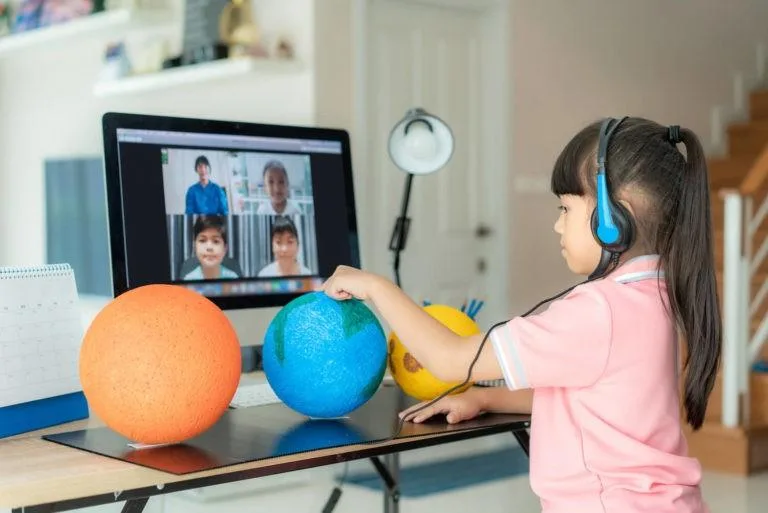
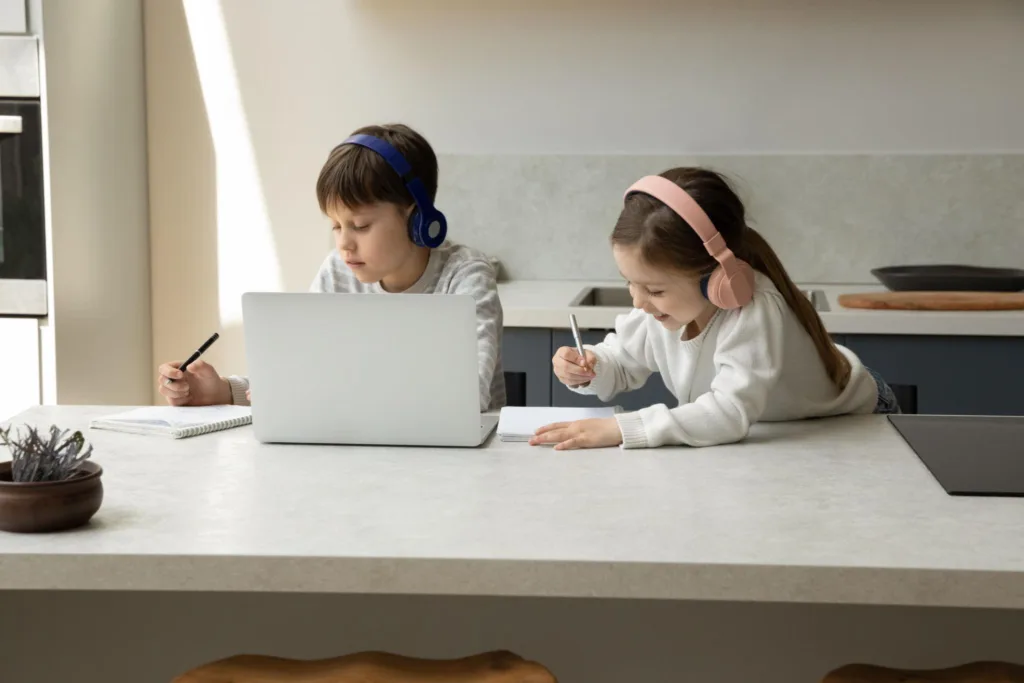
Primary Science online lessons need to be clear, visual and interactive. ON22 Academy’s Primary Science online classes are designed around a consistent structure that combines explanation, discussion and enquiry:
- Teacher-led explanation — New ideas taught through clear, age-appropriate teaching with structured examples.
- Guided questioning — Teachers encourage students to think, predict, explain and ask their own questions.
- Visual resources — Diagrams, images, virtual whiteboards and examples help students understand scientific ideas.
- Scientific vocabulary — Students practise using subject words accurately and confidently in context.
- Simple enquiry tasks — Where suitable, students are guided through safe observation or investigation activities.
- Parent feedback — Updates on progress, effort and areas needing more practice at home.
Online Science can work well when lessons combine explanation, discussion and enquiry. It should not be reduced to watching videos passively.
Practical Science at Primary Level
Primary Science often works best when children can connect ideas to real life. This may include simple activities such as:
- Observing plants grow
- Sorting materials by property
- Comparing shadows at different times of day
- Recording weather patterns
- Testing magnets safely
- Looking at everyday forces in action
- Discussing healthy eating and nutrition
- Drawing and labelling simple circuits
- Comparing animal habitats
Any practical task at home must be safe, age appropriate and supervised where needed. ON22 can support the learning and explanation, but parents remain responsible for the home environment and supervision.
Practical Science does not need to be complicated. A child can learn a great deal by observing carefully and explaining what they notice.
Science Vocabulary Matters
Science has its own language. Primary students may need support using subject-specific words accurately and confidently in both spoken and written explanations.
Children do not need to use every scientific word perfectly at once. But they do need repeated exposure and practice.
A student who can explain Science clearly at Primary level will usually find Lower Secondary Science easier — because later topics use more technical vocabulary and precise explanations are expected.
Key scientific words students may practise:
Our Experience Supporting Primary Science Families
In our experience, many children enjoy Science because it begins with curiosity. The challenge is helping them move from “that’s interesting” to “I can explain what is happening.”
Parents often tell us their child loves animals, space, experiments or nature. That interest is valuable, but it needs structure if the child is going to build real scientific understanding.
We have seen that vocabulary can be a hidden barrier. A child may understand an idea in everyday language but struggle when asked to use scientific words such as habitat, material, force, prediction, evidence or conclusion.
The strongest progress happens when students are encouraged to ask questions, use the right words and explain ideas in their own sentences. Primary Science should feel exciting, but it should also teach children how to think carefully.
Supporting Home-Educated Students
Primary Science can be a strong part of a home education programme because it connects naturally to the world around the child.
ON22 Academy can support home-educating families with structured Science teaching, guided enquiry and parent communication.
Home-educating parents may need to think about:
- Whether Science is being covered regularly
- Whether the child is learning Biology, Chemistry and Physics foundations
- Whether practical enquiry is included safely
- Whether scientific vocabulary is being developed
- Whether the child is recording observations clearly
- Whether the child is ready for Lower Secondary Science later
Parents and guardians remain responsible for checking official home education, local authority, safeguarding, legal and educational requirements that apply to their child.

Supporting International Students
International families may choose Primary Science online classes because they want their child to build British Curriculum Science foundations while living outside the UK.
- Moving between countries
- May return to UK education later
- Need English-medium Science vocabulary
- Studying locally but need British Curriculum alignment
- Need flexible online learning across time zones
- Enjoy Science but need more structured explanation
Families should consider time zones, English language confidence, local schooling and the amount of home support available for any safe practical tasks.
Preparing for Lower Secondary Science
Lower Secondary Science becomes harder when students have not built these habits. Topics become more technical, vocabulary becomes more precise and students are expected to explain scientific processes in more detail.
Curiosity & questioning
Basic Biology knowledge
Basic Chemistry knowledge
Basic Physics knowledge
Scientific vocabulary
Observation skills
Simple investigation skills
Awareness of evidence & conclusions
Primary Science support helps make that transition more manageable.
This Support May Suit Your Child If…
- Is curious about the world but needs structured teaching
- Enjoys Science but needs more challenge or organisation
- Finds scientific vocabulary difficult
- Needs help explaining observations clearly
- Needs British Curriculum Science support
- Is home educated and needs structured Science lessons
- Is learning internationally and needs English-medium Science support
- Is preparing for Lower Secondary Science
- Can engage with online lessons with suitable home support
This Support May Not Be Right If…
- The child cannot focus online even with adult support
- There is no quiet learning space available
- Attendance is likely to be irregular
- Parents expect online lessons to replace all practical exploration
- Follow-up tasks will not be completed at home
- The child needs continuous in-person supervision
- The family wants only occasional homework answers rather than structured learning
This does not mean the child cannot improve — it means the support may need to be adjusted or the home routine strengthened first.
What Parents Can Do at Home
Parents can support Primary Science without needing to be scientists. Science learning grows when children feel safe to wonder, test ideas and correct their thinking.
- Encourage your child to ask questions
- Ask them to explain what they noticed
- Use everyday examples from cooking, weather or materials
- Read simple Science books or articles together
- Help with safe observation tasks at home
- Practise scientific vocabulary in conversation
- Review teacher feedback together
- Connect Science topics to real life around them
- Keep a calm, curious tone about mistakes
- Encourage children to say “I don’t know yet”
Start with a Primary Science Consultation
A consultation helps us understand your child’s current Science confidence before recommending support. We will discuss age, learning situation, interest in Science, vocabulary, topic understanding and whether online learning is suitable.
Topics we usually cover: age & situation · Science interest & confidence · scientific vocabulary · Biology, Chemistry & Physics foundations · home support available · consolidation, structure or challenge needed
 Achieve Academic Excellence with Expert Mathematics, Science, and English Academy Worldwide