

 Achieve Academic Excellence with Expert Mathematics, Science, and English Academy Worldwide

Structured online English for ages 5–11 — building reading fluency, writing confidence and strong literacy foundations for life.
ON22 Academy is a virtual academy and online education provider offering Primary English online classes for students aged 5–11. Our support helps children build reading fluency, comprehension, vocabulary, spelling, grammar, writing confidence and spoken communication skills. Lessons follow British Curriculum expectations where suitable and are delivered through structured online teaching, guided practice and parent feedback.

Primary English is one of the most important foundations in education because it affects almost every other subject.
A child who reads confidently can access Science, History, Geography, Mathematics word problems and later examination texts more easily. A child who writes clearly can explain ideas, organise thoughts and show what they understand.
When English foundations are weak, the problem often appears in several places at once. A child may avoid reading, write very short answers, struggle to understand instructions or become frustrated when asked to explain ideas in detail.
ON22 Academy’s Primary English online classes are designed to help children develop literacy skills through clear teaching, guided practice and steady encouragement.
The aim is not to turn Primary children into exam candidates too early. The aim is to help them become confident, accurate and thoughtful users of language.
Primary English support may be suitable for children who:
Support tailored to the child's age, confidence and current literacy level.
Lessons aligned to British Curriculum expectations where suitable.
Children who struggle to decode words or understand what they read.
Structured English teaching for families who home educate.
UK-style English literacy support for families learning abroad.
Children who avoid written tasks or write only a few words.
Students who need to improve accuracy and sentence control.
Preparing for the transition into Lower Secondary English.
Children who benefit from clear explanation, modelling and regular feedback.
Primary English gaps can be easy to miss.
A child may be able to read aloud but not fully understand what they are reading. Another may have good ideas when speaking but struggle to put them into writing. Some children write quickly but with weak sentence control, while others write very little because they are afraid of making mistakes.
These gaps matter because later learning depends on literacy:
Primary English is not just an English subject. It supports the child’s whole academic development.
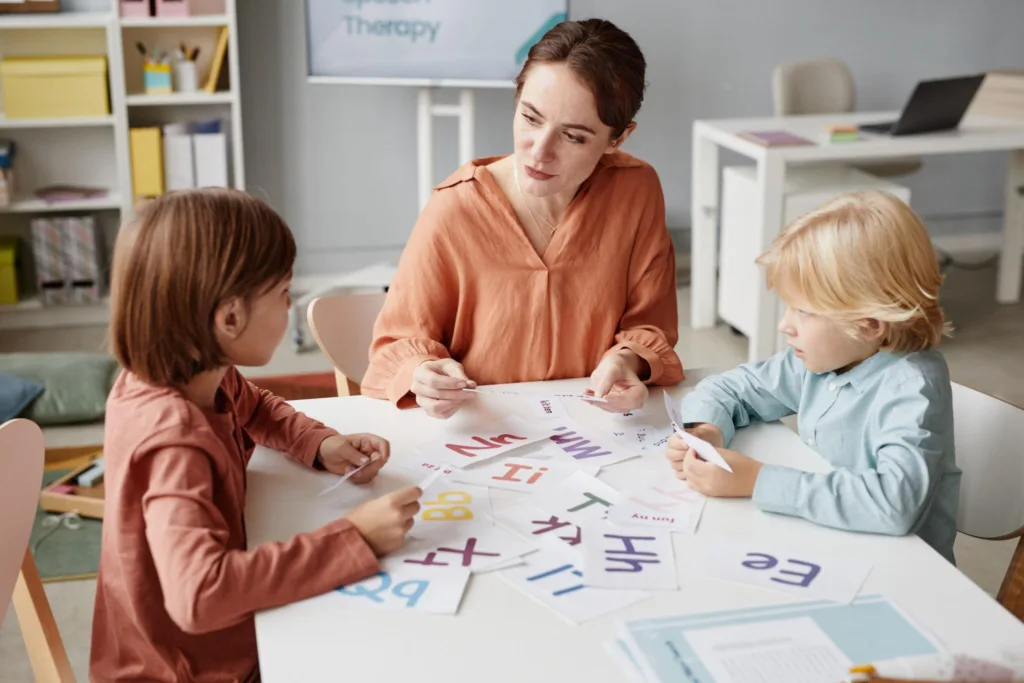
Topics covered depend on the child’s age, confidence and current literacy level.
Reading aloud with accuracy, recognising common words, improving pace and expression, building reading stamina, understanding punctuation while reading and developing confidence with unfamiliar words.
Understanding main ideas, finding information, making inferences, predicting, sequencing, explaining characters and events, understanding fiction, non-fiction and poetry, and answering questions with evidence from the text.
New words and meanings, synonyms and antonyms, word families, prefixes and suffixes, subject vocabulary, descriptive language, choosing precise words and understanding words in context.
Sentence structure, capital letters and full stops, commas and apostrophes, verb tenses, plurals, paragraphs, spelling patterns, common spelling errors and proofreading skills.
Story ideas, character, setting, description, dialogue, openings and endings, sentence variety, planning, editing and improving, writing with imagination and control.
Instructions, reports, letters, persuasive writing, explanations, reviews, paragraph structure, planning for different audiences, answering questions clearly and building spoken confidence.
Primary English lessons need to be structured, calm and age appropriate. ON22 Academy’s online classes are designed around a consistent structure:
Primary students still need support at home. Younger children may need help logging in, staying focused or completing follow-up tasks. Older Primary students may become more independent, but routine still matters.

At Primary level, the first priority is always secure reading, understanding and confidence. Deeper analysis comes later. If a child is pushed too quickly into advanced interpretation without secure comprehension, English can become confusing and stressful.
Decoding words correctly before moving to deeper meaning.
Following plot, events and ideas clearly as they read.
Identifying key information and relevant textual clues.
Putting understanding into words, spoken and written.
Finding and quoting relevant details to support answers.
Reading more, reading wider, reading with growing confidence.
Primary English should build the habits that make later analysis possible.

Writing is difficult because it requires several skills at once. A child has to think of ideas, choose words, form sentences, remember punctuation, spell accurately and organise the whole piece. This is why some children can explain ideas out loud but struggle when writing.
Primary English support can help by modelling good sentences, building paragraphs gradually, using planning tools, encouraging editing and showing children how to improve one step at a time.
For some children, the first sign of progress is not a perfect piece of writing. It is writing more willingly and with less fear.
In our experience, children often make progress when English is broken down into smaller, manageable skills. A reluctant writer may first need sentence confidence. A weak reader may need help with fluency before deeper comprehension. A child with good ideas may need structure, not more imagination.
Primary English is a core part of most home education plans.
ON22 Academy can support home-educating families by providing structured English teaching, guided reading, writing tasks and parent feedback.
Home-educating parents may need to think about:
Parents and guardians remain responsible for checking official home education, local authority, safeguarding, legal and educational requirements that apply to their child.
International families may choose Primary English online classes because they want their child to build British Curriculum literacy skills while living outside the UK.
This may support students who:

Primary English should prepare students for Lower Secondary learning. Lower Secondary English becomes harder when children enter it without secure literacy habits — they begin to read more demanding texts, write longer answers and explain ideas in more detail.
Primary English support helps make that transition more manageable.
This does not mean the child cannot improve — it means the support may need to be adjusted or the home routine strengthened first.
Parents can make a significant difference to Primary English progress. Children do not become confident readers and writers through lessons alone — reading, talking, writing and feedback need to happen regularly.
A consultation helps us understand your child’s current literacy level before recommending support. We will discuss age, school situation, reading and writing confidence, grammar, spelling, vocabulary and whether online learning is a good fit.
Topics we usually cover: age & situation · reading fluency & comprehension · writing confidence · grammar & spelling · vocabulary · available home support · consolidation, confidence or challenge needed
Achieve Academic Excellence with Expert Mathematics, Science, and English Academy Worldwide